[Note; this is the article that appeared in our April newsletter, but further good news has been received since this date. Click here to read more]
We ran a Save our Services petition, which over a thousand people signed, the South London Press ran an article about our cause and we even got a mention in parliament. Now, finally, Network Rail has given us reassurances that there will be no significant reduction in our rail services into London Bridge after the opening of the East London Line Extension.
Last Autumn, Network Rail published its draft Route Utilisation Strategy (RUS) setting out proposed levels of rail services from 2010. It clearly suggested a significant reduction in services to London Bridge. There were doubts too about the continuation of the current off-peak services to Victoria.
Network Rail now says that the total number of trains between 7am and 10am will remain at the current level of 18 with only a slight adjustment to the present hourly spread of trains. All trains, they tell us, should be 8 carriages long whereas currently some are only 6 carriages long.
The indications are that the present direct, off-peak services to Victoria may continue. At peak times, the extension of the East London Line to Crystal Palace will reduce journey times to Victoria and Clapham Junction, although this will involve a change at Crystal Palace.
These services are dependent on the agreement of the Department for Transport and on its discussions with the train operators and Transport for London when the franchises are renegotiated in 2009. The Forest Hill Society will therefore continue to closely monitor the situation over the next couple of years to make sure that these revised proposals become a reality.
It’s also very exciting to see Honor Oak Park and Forest Hill now appearing on Tube Maps across London! It may only be on a faint, dotted line at the moment, but come 2010 we will have an extra 8 trains per hour of 4 carriages on the East London Line Overground providing fast and regular connections to the Jubilee Line, Crystal Palace, Docklands and the East of the City of London.
Other improvements include Oyster readers at all stations along the line. Commuters working in the east of the City, travelling on a direct connection to Shoreditch, will benefit from cheaper tickets by avoiding zone 1. The southbound platform at Forest Hill is to be made accessible to disabled passengers with money from the Department for Transport.
On the negative side, all services between London Bridge and Forest Hill/Sydenham will be stopping services, removing existing fast services. From 2009, there will be no more through trains to Charing Cross.
We will continue to press for 10 or 12 carriage trains into London Bridge to take into account the suppressed demand for rail services in this area. This would require the extension of all station platforms along the route.
The Society is grateful to Jim Dowd, our local MP, and Len Duvall, our GLA member, who have lobbied hard in support of our aims. The Save our Services campaign was run jointly with the Sydenham Society.
We would like to thank everyone who signed our petition.
06 April 2008

Good News ... BUT ...
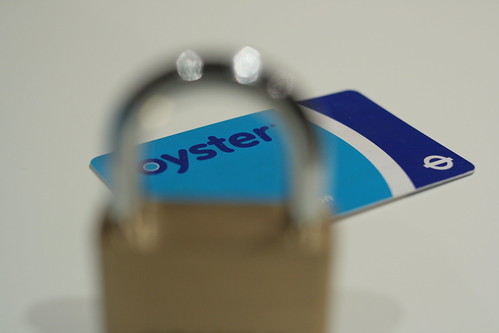
We’ve recently learned from Southern Railways that when Oyster readers come into operation at Forest Hill Station in January 2009, the gate to Perry Vale will be kept shut throughout the day, only opening during evening peaks. From 3pm until the end of the peak, members of staff will be on hand to read everyone’s oyster card with handheld readers.
This system would inevitably create delays for passengers exiting at Perry Vale. We also question whether staff would be willing to stand in the rain, snow, or freezing/boiling temperatures for hours at a time with trains every five minutes. In reality, this system is likely to lead to the gates being closed all day.
The Forest Hill Society, along with Councillor John Paschoud, is putting pressure on Southern Railways and others involved in the Oyster implementation to avoid shutting the gate. There are two alternatives that we would prefer:
1. Oyster reader available at the Perry Vale exit for pre-pay customers to swipe in and out, similar to the system in place until recently at New Cross Gate. This would allow the exit to remain open as it does today.
2. A new exit onto Perry Vale car park providing staffed ticket barriers all day and an accessible entrance to the station on the Perry Vale side of the station.
Further problems will occur at Sydenham and Brockley where the exits on the northbound (Sydenham) and southbound (Brockley) platforms will be remotely operated for disabled passengers only. Of course, once these gates are opened there will be nobody to stop other passengers flooding through the gates. Honor Oak Park station should be fairly straightforward as a single set of barriers can be placed in the ticket hall.
Definitely one to watch.
Green Aliens Invade SE23!
The Wildside — A regular look at the non human residents of SE23
They come from a place far, far away but they have found conditions here perfect for colonisation. In fact, Rose-Ringed Parakeets are now one of the most frequently seen birds in gardens and parks in SE23. And with their emerald-green feathers and noisy squawk, they are an exotic addition to our urban landscape.
 But how can they survive here in South East London? Although they look like they’re used to tropical summers, they actually originate from the foothills of the Himalayas, so they don’t need soaring temperatures in order to feel comfortable. They are also very good generalists, able to survive in a wide range of habitats, like grey squirrels, cockroaches and rats (only prettier).
They are strongly social birds, constantly communicating, even in flight, which is why that unmistakeable cry is so familiar to anyone living in this area.
Flocks of up to fifty are quite common around Forest Hill and Honor Oak and numbers seem to have been increasing rapidly in recent years, perhaps a result of milder winters. Across London as a whole, the population numbers about 30,000 and the RSPB estimates it will rise to nearly 50,000 by 2010. It’s thought that 90% of the UK parakeet population lives in and around London.
Nobody knows for sure how they got here but there are some exciting myths. Are they descended from parakeets released by Jimi Hendrix as a peace offering? Or perhaps they escaped from the set of “The African Queen?” The far more plausible, but prosaic, explanation is that the population of wild parakeets was started by a series of escaped pets.
Opinion is divided as to whether they are a “bad thing” and the government has ordered a survey to assess their impact on native species. There are concerns that they might compete with other hole-nesting birds such as woodpeckers and starlings but there’s no strong evidence. And whether we like it or not, it looks like they are here to
stay.
* Photo taken by Fraser Elliot on his balcony on Honor Oak Road
They come from a place far, far away but they have found conditions here perfect for colonisation. In fact, Rose-Ringed Parakeets are now one of the most frequently seen birds in gardens and parks in SE23. And with their emerald-green feathers and noisy squawk, they are an exotic addition to our urban landscape.
 But how can they survive here in South East London? Although they look like they’re used to tropical summers, they actually originate from the foothills of the Himalayas, so they don’t need soaring temperatures in order to feel comfortable. They are also very good generalists, able to survive in a wide range of habitats, like grey squirrels, cockroaches and rats (only prettier).
 They are strongly social birds, constantly communicating, even in flight, which is why that unmistakeable cry is so familiar to anyone living in this area.
Flocks of up to fifty are quite common around Forest Hill and Honor Oak and numbers seem to have been increasing rapidly in recent years, perhaps a result of milder winters. Across London as a whole, the population numbers about 30,000 and the RSPB estimates it will rise to nearly 50,000 by 2010. It’s thought that 90% of the UK parakeet population lives in and around London.
Nobody knows for sure how they got here but there are some exciting myths. Are they descended from parakeets released by Jimi Hendrix as a peace offering? Or perhaps they escaped from the set of “The African Queen?” The far more plausible, but prosaic, explanation is that the population of wild parakeets was started by a series of escaped pets.
Opinion is divided as to whether they are a “bad thing” and the government has ordered a survey to assess their impact on native species. There are concerns that they might compete with other hole-nesting birds such as woodpeckers and starlings but there’s no strong evidence. And whether we like it or not, it looks like they are here to
stay.
* Photo taken by Fraser Elliot on his balcony on Honor Oak Road
Subscribe to:
Posts (Atom)